
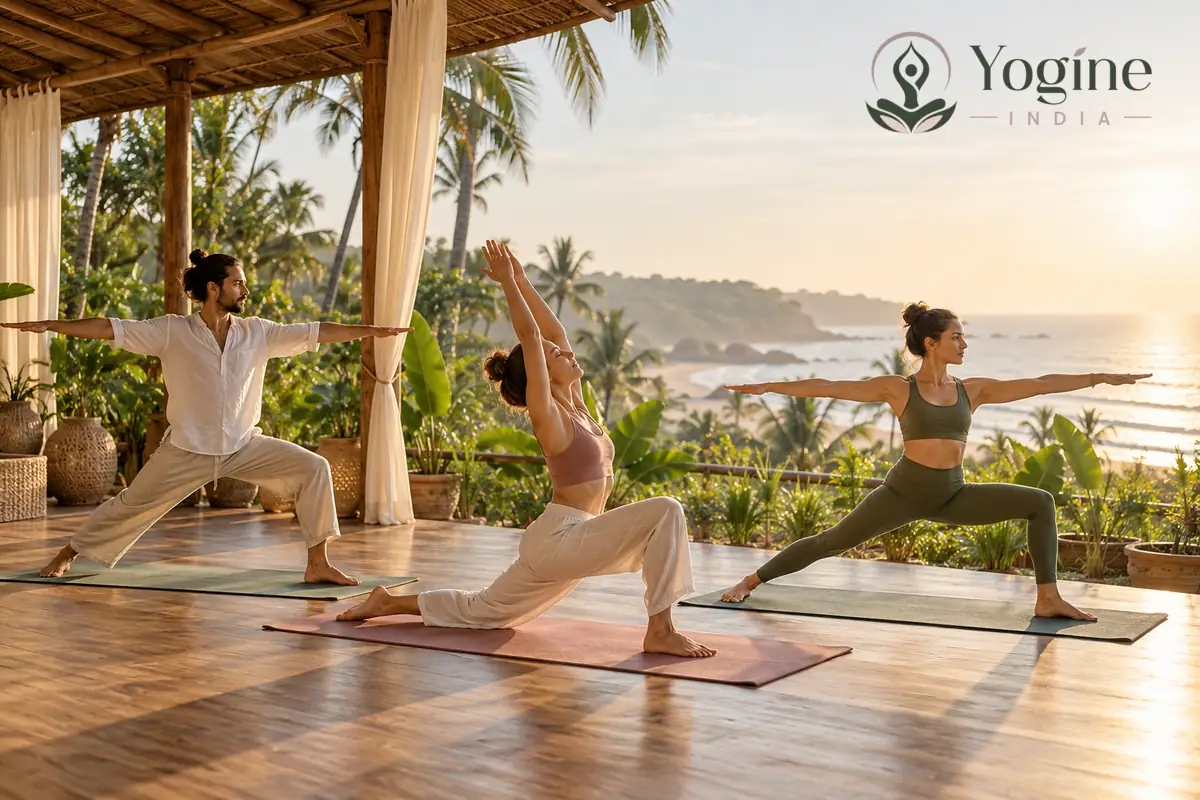
Hatha, Vinyasa or Ashtanga? Finding the Yoga Practice That Fits You
If you’ve ever looked at a yoga class schedule and wondered whether to choose Hatha, Vinyasa or Ashtanga, you’re not alone.
At first glance, the names can be confusing. Some classes promise slow, mindful movement, while others involve flowing sequences and physically demanding postures. If you’re new to yoga, it can be difficult to understand which style suits you.
But here’s something worth remembering: yoga isn’t about finding the most challenging class or mastering impressive poses. It’s about discovering a practice that works for your body, your experience and what you’re hoping to gain from it.
Whether you’re stepping onto a yoga mat for the first time or returning after a long break, understanding the differences between these three popular yoga styles can help you make a more confident choice.
And if you’re planning a Yoga Retreat in North Goa, choosing a practice that feels right for you can make your time in Goa even more enjoyable.
Hatha Yoga: Learning to Slow Down and Pay Attention
Hatha yoga is often one of the first styles people encounter when beginning their yoga journey.
Traditionally, Hatha is a broad term covering physical yoga practices. However, in modern yoga studios, a Hatha class usually involves a slower pace, individual postures, breathing exercises and moments of relaxation.
Instead of moving quickly from one pose to another, you’ll generally spend more time understanding each posture.
You might begin with gentle warm-up movements, move through standing and seated asanas, and finish with breathing exercises or relaxation.
This slower approach allows you to notice how your body responds to movement.
You begin to understand your posture, where you’re holding tension and how your breathing changes as you move.
Who Should Choose Hatha Yoga?
Hatha yoga can be a good starting point if:
- You’re completely new to yoga.
- You prefer slower, more deliberate movements.
- You want to understand basic yoga postures and alignment.
- You enjoy combining physical movement with breathing and relaxation.
- You’re returning to yoga after spending some time away from practice.
One common misconception is that Hatha yoga is always easy.
It isn’t necessarily.
Holding a posture with awareness, maintaining steady breathing and paying attention to alignment can require considerable effort.
The difference is that you generally have more time to explore each movement.
For beginners, that extra time can make the learning experience more comfortable and less overwhelming.
Vinyasa Yoga: Finding Your Rhythm Through Movement
If Hatha encourages you to pause and explore a posture, Vinyasa invites you to discover how one movement connects with the next.
Vinyasa yoga is known for its flowing sequences, where movement is coordinated with breathing.
You might inhale while lifting your arms, exhale while folding forward and continue moving through a sequence of connected postures.
Rather than treating every asana as a separate exercise, Vinyasa brings them together into a continuous practice.
This creates a different kind of experience.
Your attention moves between breathing, balance, transitions and the sensations of your body.
Although Vinyasa classes can feel energetic, the purpose isn’t simply to move faster.
A thoughtful Vinyasa practice encourages you to move with awareness instead of rushing through postures.
Who Should Choose Vinyasa Yoga?
Vinyasa may appeal to you if:
- You enjoy movement and variety in your workouts.
- You prefer a flowing practice over holding individual poses.
- You want to explore strength, balance and flexibility.
- You enjoy connecting your breathing with physical movement.
- You’re comfortable learning sequences that may change between classes.
One of the interesting things about Vinyasa is that every teacher can bring a different approach to the practice.
Some classes are gentle and accessible, while others include more demanding movements and transitions.
If you’re a beginner, look for a class that welcomes newcomers and offers modifications.
You don’t need to move perfectly or keep up with everyone else. Learning to recognise your own pace is part of the practice.
Ashtanga Yoga: Discovering Discipline Through Repetition
Ashtanga yoga offers a more structured approach.
Unlike a typical Vinyasa class, where the sequence may change, traditional Ashtanga Vinyasa yoga follows established sequences of postures.
Each movement is connected with breathing, and practitioners gradually become familiar with the order of the practice.
At first, repetition might sound less interesting than trying something new every day.
But that consistency is part of what makes Ashtanga distinctive.
Because the sequence remains familiar, you have the opportunity to observe how your practice changes over time.
A posture that once felt unfamiliar may become easier to understand. You may notice improvements in coordination, concentration or your ability to maintain steady breathing.
The structure also encourages consistency and patience.
Who Should Choose Ashtanga Yoga?
Ashtanga may suit you if:
- You enjoy structure and a consistent routine.
- You prefer a physically active yoga practice.
- You like returning to familiar sequences and noticing progress.
- You want to develop discipline and concentration.
- You already have some yoga experience and want to explore a more structured approach.
Traditional Ashtanga can be physically demanding, particularly when practising longer sequences.
However, that doesn’t mean beginners must avoid it completely.
An introductory class with an experienced teacher can help you understand the foundations, learn suitable modifications and gradually build familiarity with the practice.
There’s no need to master an entire sequence in your first few sessions.
Hatha vs Vinyasa vs Ashtanga: How Do You Decide?
Now that you understand the basic differences, the next question is simple.
Which style should you actually choose?
The answer depends less on which practice is considered better and more on what you enjoy and feel comfortable doing.
If you’re looking for a slower class where you can learn postures carefully, Hatha may be a good place to begin.
If you enjoy continuous movement and prefer variety, Vinyasa might feel more natural.
If you appreciate a consistent routine and want to explore a structured sequence, Ashtanga could be worth trying.
But these aren’t strict rules.
Someone who enjoys Ashtanga may also appreciate a slower Hatha session. A regular Vinyasa practitioner might discover that holding postures longer offers a completely different learning experience.
Your preferences can also change over time.
What feels right when you’re starting yoga may be different from what you enjoy after several months of regular practice.
Rather than limiting yourself to one style immediately, consider trying a few classes and noticing how you feel during and afterward.
That experience can tell you more than any description.
What Should Beginners Know Before Their First Yoga Class?
Starting something unfamiliar can feel intimidating, especially when everyone around you appears to know what they’re doing.
But yoga isn’t a competition.
You don’t need exceptional flexibility, expensive equipment or previous experience to begin.
A few simple things can make your first class more comfortable.
Arrive with an open mind. You might not understand every posture or instruction immediately, and that’s perfectly normal.
Pay attention to your breathing. Instead of focusing only on how a pose looks, notice whether you’re breathing comfortably.
Avoid forcing movements. Your range of motion may differ from someone else’s. Pain is a reason to stop or modify a posture, not push harder.
Speak with your teacher. If you’re new, have an injury or aren’t sure whether a movement is suitable, let the instructor know before the session begins.
Give yourself time. Yoga becomes more familiar through practice. You don’t need to understand everything after one class.
The most useful first session is one that leaves you feeling interested in returning.
Finding Your Yoga Practice in North Goa
There’s something appealing about exploring yoga while spending time in Goa.
Away from the usual routines of home, you may find it easier to make space for activities that often get pushed aside during a busy week.
Mandrem, in particular, offers a quieter coastal setting for travellers who enjoy yoga, beach walks and a more relaxed holiday atmosphere.
At Yogine India, located in Junas Waddo, Mandrem, different yoga styles are part of the practice experience.
The approach connects physical movement with breathing, awareness and the traditional principles of yoga.
Priyanka Mukharjee Parihar, a senior yoga teacher associated with Nalanda Retreat, brings years of teaching experience and an emphasis on mindful movement and thoughtful sequencing.
Whether you’re visiting Goa for a short holiday or looking to deepen an existing practice, exploring different yoga styles can help you understand what works best for you.
You can discover Yoga Classes in North Goa at Yogine India and explore the available practices before choosing your next session.
Remember, Your Yoga Practice Can Change With You
One of the most rewarding things about yoga is that your practice doesn’t have to remain the same forever.
There may be days when you enjoy the steady pace of Hatha, days when you want the flowing movement of Vinyasa and times when the structure of Ashtanga feels particularly appealing.
You don’t need to choose one style for life.
You simply need to begin somewhere, remain curious and pay attention to what your body is telling you.
Over time, you may discover that yoga offers more than stronger muscles or greater flexibility.
It can become an opportunity to pause, move with awareness and spend a little time reconnecting with yourself.
Whether your journey begins with a gentle Hatha class, an energetic Vinyasa flow or the structured rhythm of Ashtanga, the most important thing is finding a practice you genuinely enjoy.
Because the right yoga practice isn’t necessarily the one that looks most impressive.
It’s the one you feel comfortable returning to, again and again.


Leave a Reply